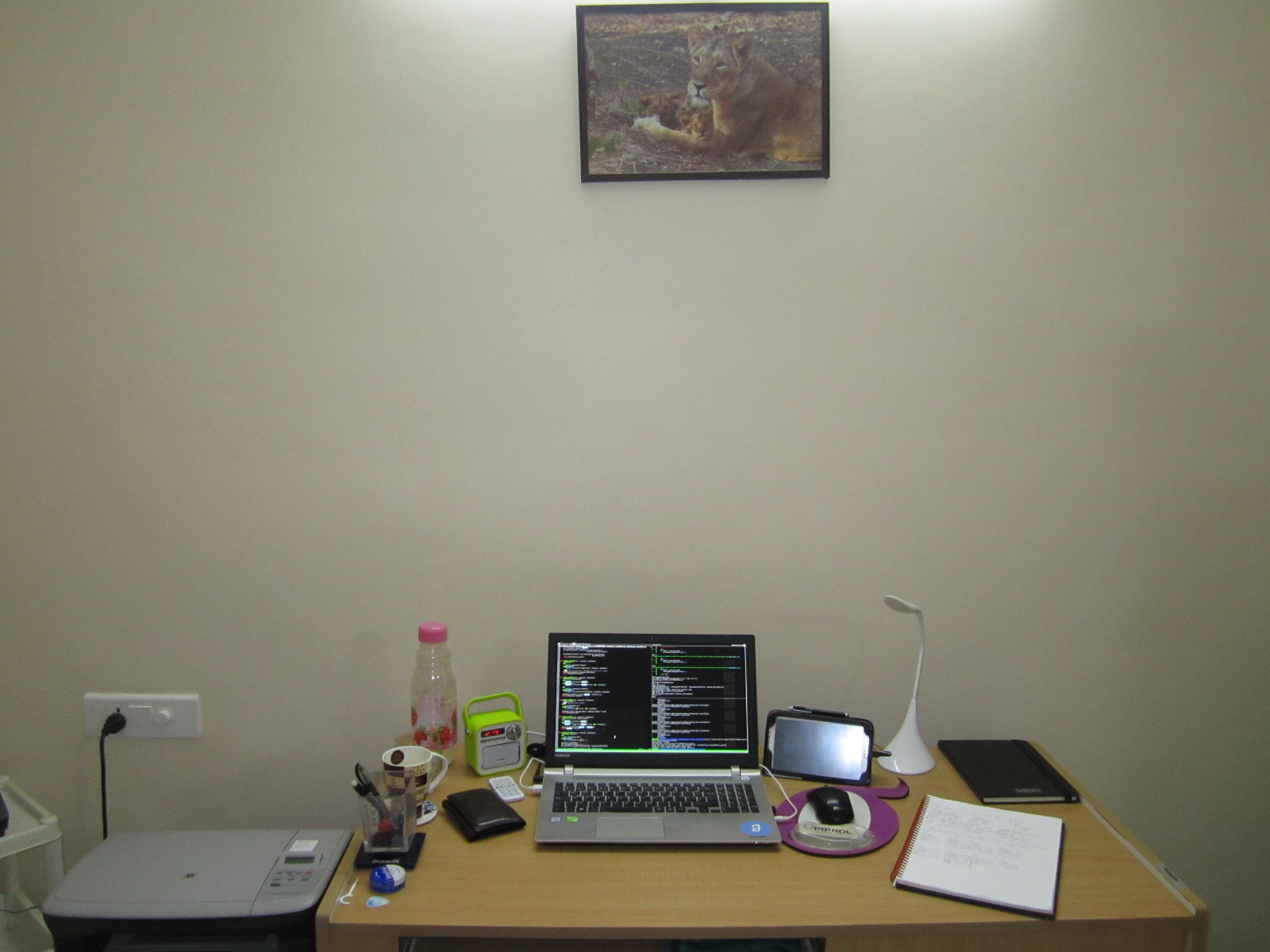
From October 2016 to January 2017, Nina and I were in Hyderabad, India — and I worked remotely for Jukedeck throughout. Here’s what I learned.
Setup
Before leaving London, my team lead Kevin and I agreed on IST working hours (11 AM–7 PM, giving five hours of overlap with London), daily standup updates via Slack, and asynchronous participation in planning via Google Docs and Skype.
Standups
We initially had a colleague hold a laptop during in-person standups, but audio quality was poor. We switched to asynchronous video messages via Skype — which had the unexpected benefit of keeping standups brief and concise.
Pair Programming
When assigned pair programming with Marco, we eventually settled on SSH to the company server with both of us attached to the same Tmux/Vim session, supplemented by Skype. Worked well for a five-hour session.
Internet
The first two weeks were rough — unreliable 10 Mbps BSNL with frequent outages, and a dynamic IP that needed daily updates for server access. We eventually unblocked an IP range instead.
The Ups
Minimal distractions. Thorough code review. No commute (I usually cycle and don’t mind it, but still). Most importantly: a genuinely supportive team and a manager who assigned tasks thoughtfully for the remote context.
The Downs
Less influence in real-time meetings. Physical isolation despite active Slack engagement. Skype reliability around 60%. Missing team outings and informal bonding.
Verdict
Fantastic overall. Time with family, a chance to get married properly, and a useful experiment in what remote work can and can’t replicate. It’s something I’d consider again — with the right team.
Recommended reading: Remote: Office Not Required by Basecamp, and Zapier’s The Ultimate Guide to Remote Work (free PDF).